-
Charge
Charge ahead
-
Less charging. More moving.
Our ecosystem of integrated technology is specifically designed to keep you in power and moving forward. With a world of innovative charging solutions at your fingertips, at home, and even when you’re far away from home, your mind is free to focus on the things that truly matter.
-
Private
-
Home Charging
An installed home wallbox is a convenient, cost-effective and simple way to stay in power. When integrated with Kia Connect, you can schedule charging times, monitor your charging status, and even save money by making the most of off-peak electricity rates.
-


-
Public
-
Fast Charging
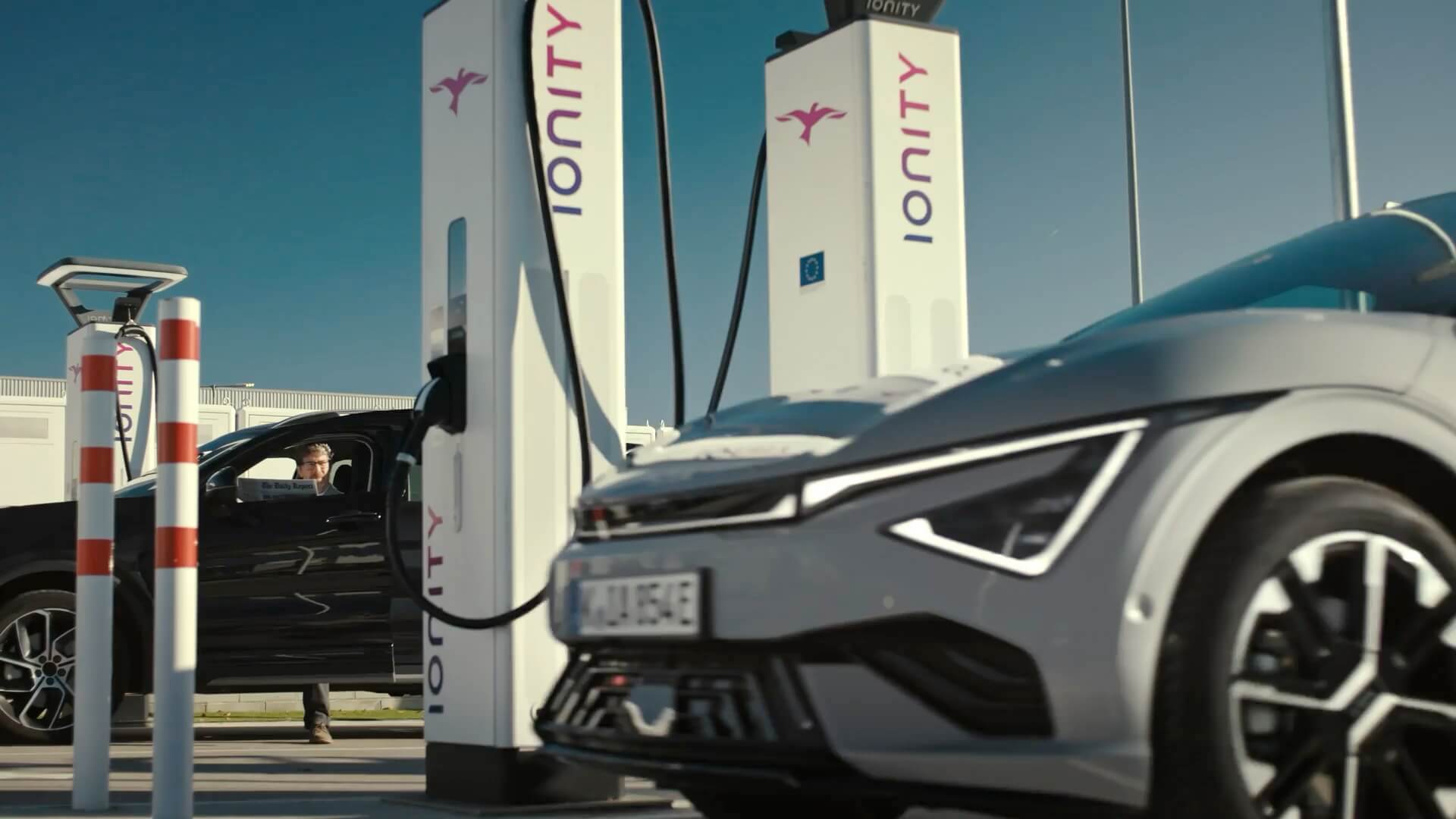
Today, Europe has a well-established network of high-speed chargers along major high-speed roads, making long-distance travel in an EV practical and increasingly seamless. Our E-GMP models support fast charging technology and can charge a battery from 10-80% in approximately 30 minutes. This means after a quick stop for coffee, you and your EV are back on top form.
-
Urban Charging
In densely populated areas, public on-street chargers can be found along curbsides, near residential areas or shopping districts, making charging convenient while shopping, at the gym, working, or running errands. And once you’ve returned with an empty battery of your own, your EV is topped up and ready to get to work.
-


-
Kia Charge
With seamless access to a vast network of over 800,000 charging stations across Europe, Kia Charge simplifies the charging experience for EV and plug-in hybrid owners. Users can view pricing, get consolidated monthly invoices, find charging stations, and check their real-time availability, making movements evermore seamless.

Share your power
Our advanced in-car technologies are designed to keep you, and those around you, feeling empowered for a more enjoyable driving experience. V2L transforms your vehicle into a mobile power source. A feature that enables you to power electronic devices from anywhere.


Renewable energy for charging.
Electric vehicles achieve their full environmental potential when charged with renewable energy. Therefore, we are dedicated to ensuring that our charging events utilize renewable energy sources to the greatest extent possible.
-
Why Renewable energy?
To make electro mobility truly sustainable, it is essential that every part of the value chain, including the production, usage, and disposal of electric vehicles. Charging plays a pivotal role in ensuring that the energy used is either sourced from renewable resources or matched with electricity from renewable sources.

-
Supporting renewable electricity.
Kia Charge supports the transition to renewable energy by purchasing Guarantees of Origin certificates. This ensures that an amount of renewable energy equivalent to the electricity consumed during charging events is produced and fed into the electricity grid, although the actual electricity used for charging may not be from renewable sources at the time of use. Guarantees of Origin certify that renewable energy is generated and added to the grid, helping to increase the overall share of renewables.

-
Charging at Ionity Stations
An exception to this is charging events at IONITY stations, where the energy is directly supplied with 100% renewable electricity in line with IONITY’s green energy ※ commitment (see ionity.eu/en/stories/50-shades-of-green).
※ "Green energy" is a term used as an equivalent to "renewable energy/electricity".

-
One centralised system.
Guarantees of Origin are the established form of renewable energy certificates (so-called Energy Attribute Certificates – EACs) in Europe, which certify how and where electricity is produced from renewable energy sources. They are therefore also referred to as the ‘birth certificate’ of electricity. Producers of electricity from renewable energy sources can have such Guarantees of Origin issued by independent registration bodies for electricity they produce and feed into the grid.

-
Renewables.
Together with our partners, we acquire Guarantees of Origin (GOs) for charging events, except for those at IONITY stations, which are directly supplied with 100% renewable electricity. We then redeem these GOs, ensuring that an equivalent amount of renewable energy is fed into the electricity grid. By doing so, Kia Charge supports the energy transition by promoting the use of renewable energy sources for charging events.